



The Economics of Footwear: Why Cheap Shoes Are Ruining Your Feet (And Your Wallet)
The late, brilliant author Terry Pratchett once wrote about the "boots theory of socioeconomic unfairness." The premise was simple: A rich man buys a spectacular pair of boots for £50. They are built to last, and they keep his feet dry for a decade. A poor man can only afford a £10 pair of boots. They leak, the cardboard soles rot, and he has to buy a new pair every single year. After a decade, the poor man has spent £100 on terrible boots and still has wet feet, while the rich man spent half as much and is walking in comfort.
This theory perfectly encapsulates the modern menswear landscape. We have been conditioned by fast fashion to view footwear as disposable. We buy a pair of cheap synthetic leather shoes for a wedding, destroy them on the dancefloor, and throw them in the bin six months later.
At Oswin Hyde, we want to break this cycle. Buying high-quality, meticulously crafted leather shoes is not an indulgence; it is a long-term economic strategy. Here is a deep dive into the real cost of cheap shoes, the anatomy of proper footwear, and how to build a rotation that lasts a lifetime.
The True Cost of "Pleather"
When you buy a cheap formal shoe from a high-street mega-retailer, you are usually buying polyurethane—plastic.
From an economic standpoint, the math is dismal. A cheap pair of plastic shoes will look terrible after three wears. The synthetic coating cracks where the foot bends, and because it is plastic, it cannot be conditioned or polished. Once it cracks, the shoe is dead.
From a biological standpoint, it’s even worse. Your feet sweat. Plastic traps that moisture. Over time, that trapped moisture breeds bacteria, destroys the internal lining of the shoe, and ruins your socks.
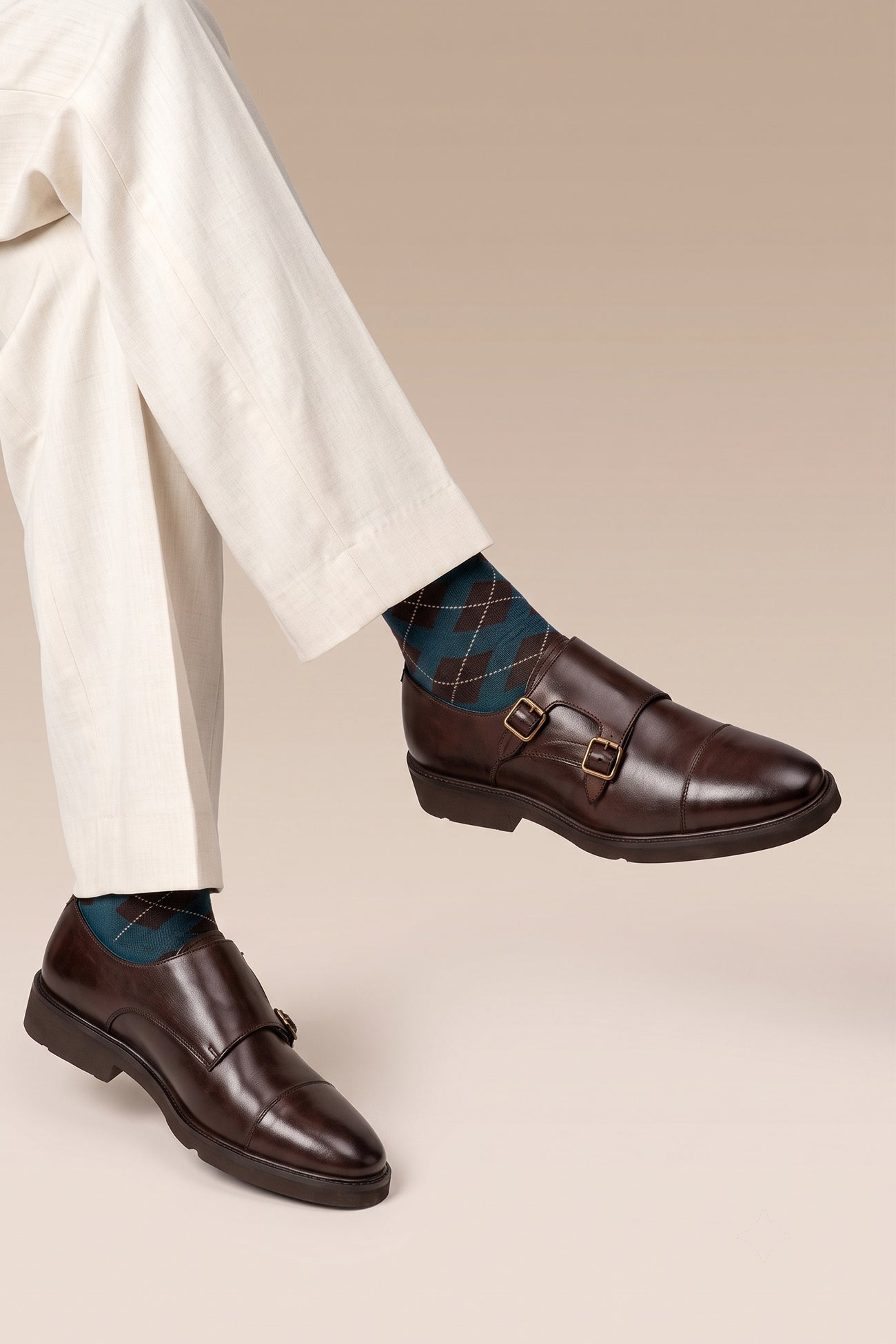
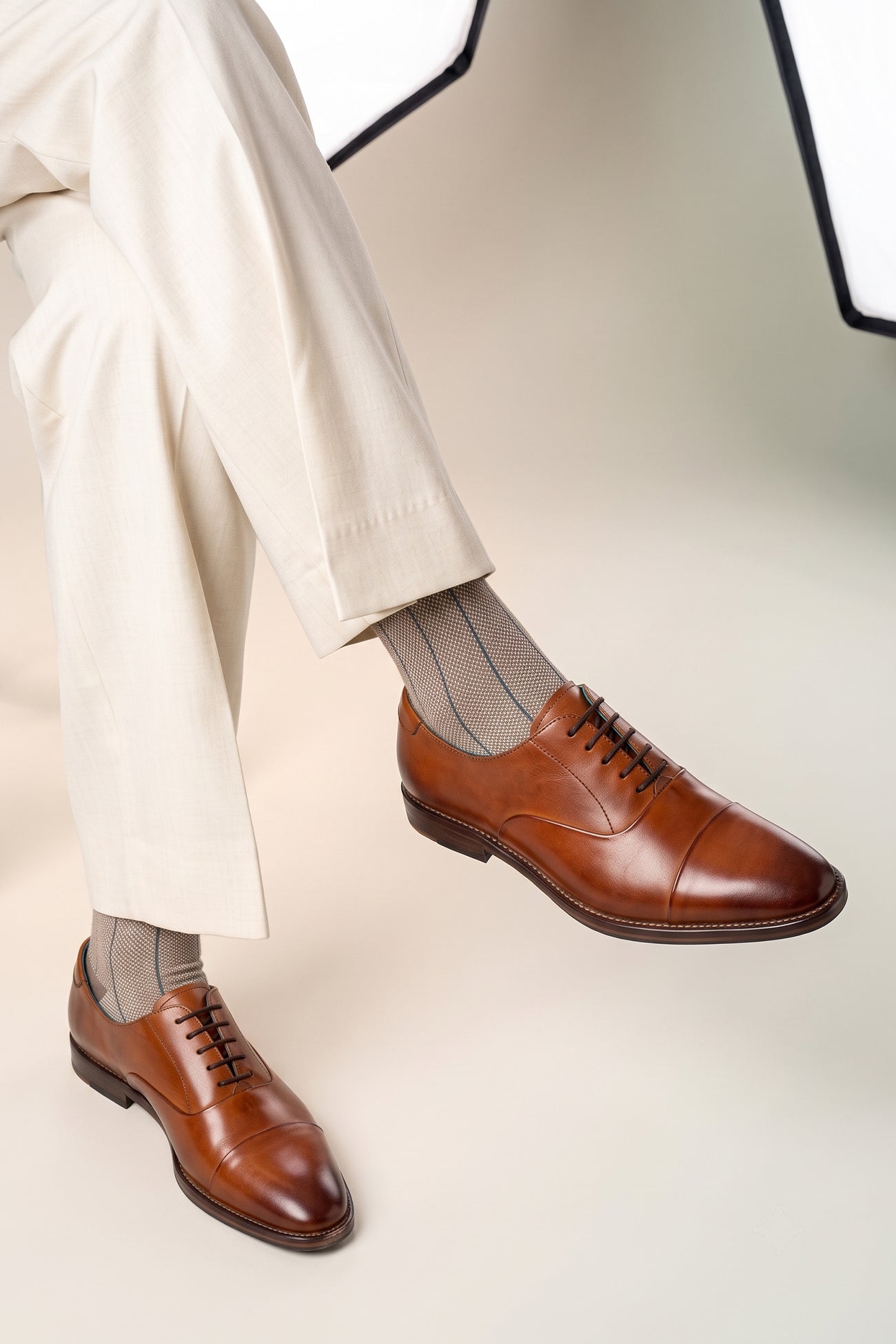
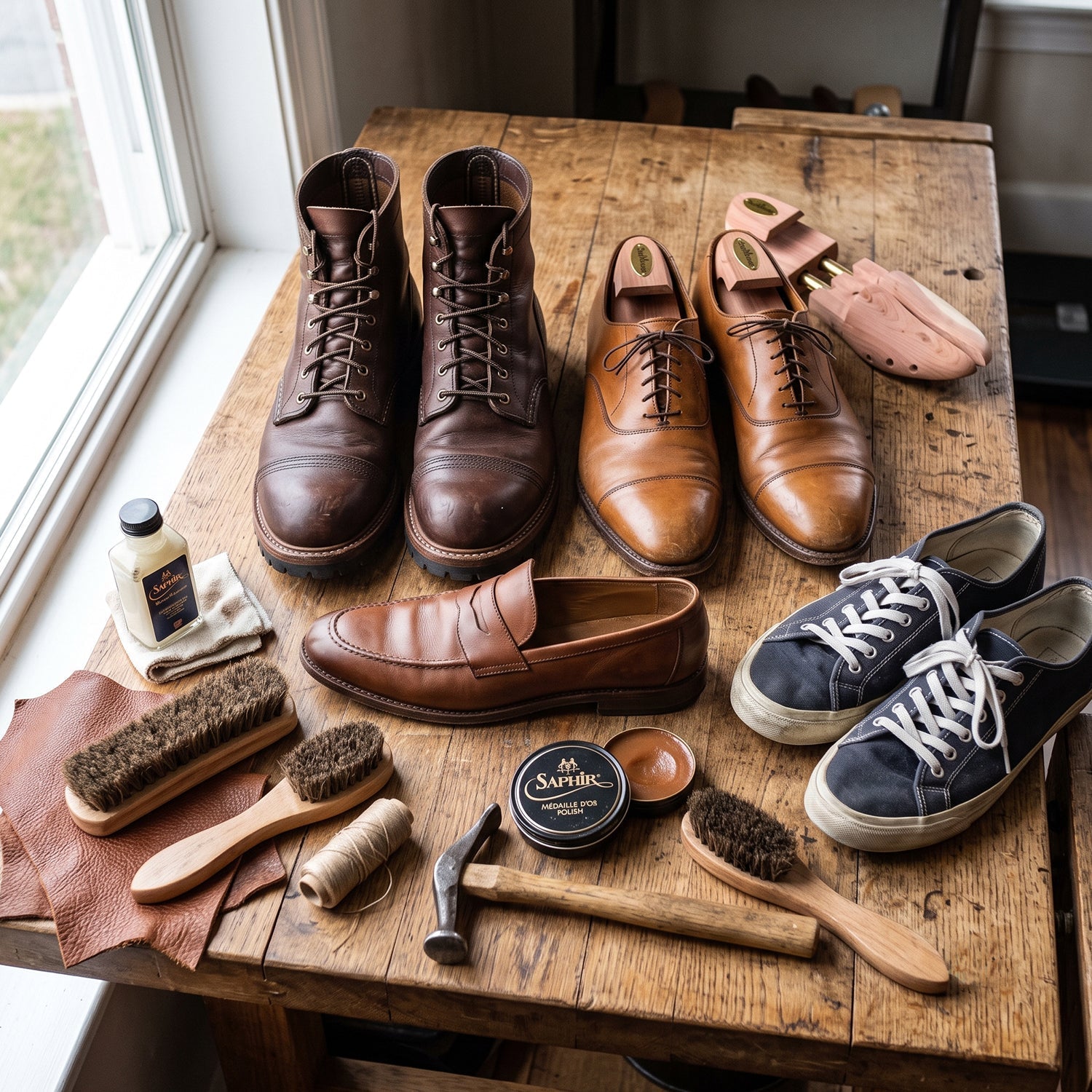
Conversely, a premium shoe crafted from real hide, like the Oswin Hyde Full-Grain Leather Oxford Collection, actually breathes. The leather absorbs moisture and releases it when you take the shoe off. The hide can be fed with creams, waxes, and conditioners, meaning scuffs can be polished out and the colour can be restored infinitely.
Anatomy of a Repair: Why Construction Matters
The biggest difference between a disposable shoe and an investment shoe is how the sole is attached to the upper.
Cheap shoes are cemented. The upper is simply glued to a rubber sole. When that glue degrades—and it always does, especially in wet British weather—the sole flaps off. Because there is no structural framework, a cobbler cannot easily re-attach a new sole. The shoe is garbage.
Investment shoes use robust stitching methods. The upper is physically sewn to the sole structure. This means that when you eventually wear a hole through the sole after years of hard use, the shoe is not dead. You take it to a cobbler, they cut the stitches, peel the old sole off, and stitch a brand new one on. The beauty of this is that the leather upper—which has spent years stretching and moulding perfectly to the exact shape of your foot—remains untouched. You get a brand new sole with a perfectly broken-in, custom-fit upper.
The Secret to Longevity: The Two-Pair Rotation
Even the highest quality leather shoes in the world will degrade if you abuse them. The single fastest way to destroy a good pair of shoes is to wear them every single day.
Leather is skin. When you wear the shoe, the leather absorbs sweat from your foot. If you wear that same shoe again the very next morning, the leather hasn't had time to dry out. You are forcing your foot into damp leather, which causes the fibers to stretch, warp, and eventually rot from the inside out.
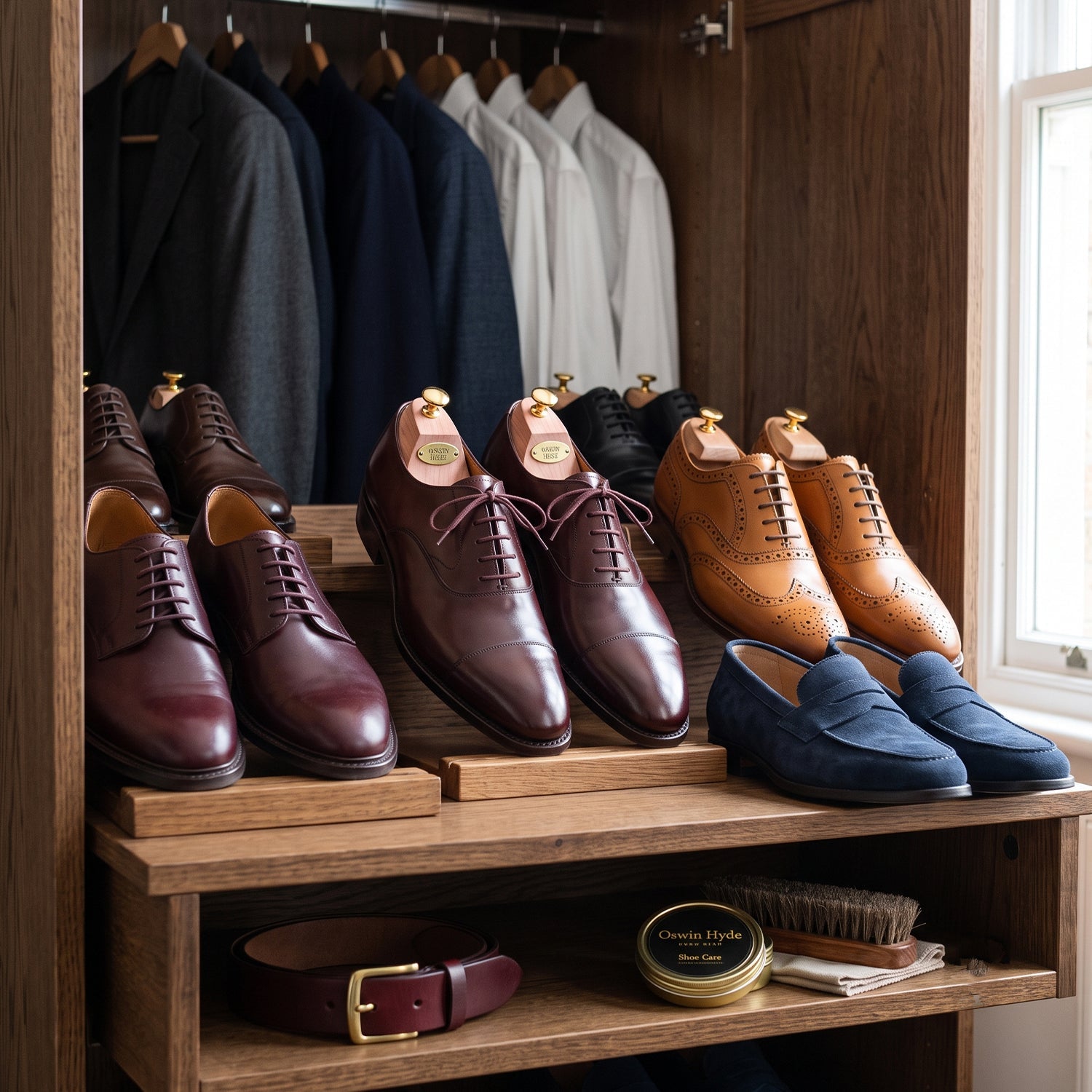
The Rule: You must give leather shoes a minimum of 24 hours to rest between wears. This means you need a rotation. If you wear a suit to work, you need two pairs of work shoes. We recommend pairing a sharp Oswin Hyde Black Leather Oxford for Mondays and Wednesdays, with a slightly more relaxed Oswin Hyde Dark Brown Brogue for Tuesdays and Thursdays. This simple rotation extends the life of both pairs of shoes exponentially.
The Non-Negotiable Accessory: Cedar Shoe Trees
If you take away one piece of advice from this entire article, let it be this: Never put a leather shoe in a wardrobe without a shoe tree inside it.
A shoe tree is a foot-shaped block of wood with a spring mechanism.
-
Moisture Absorption: Unvarnished cedar acts like a sponge. It actively draws the sweat and moisture out of the leather lining while the shoe rests, preventing rot.
-
Odour Control: The natural oils in cedar wood neutralize the bacteria that cause foot odor.
-
Shape Retention: As leather dries, the toes tend to curl upward, and deep creases form across the vamp (where the foot bends). The spring in the shoe tree applies gentle tension, pushing the leather flat and smoothing out the creases as the shoe dries.
Adding a pair of Aromatic Cedar Shoe Trees to your basket will add literally years to the lifespan of your shoes. It is the best ROI accessory in menswear.
Stop buying disposable footwear. Invest in craftsmanship, take pride in looking after it, and your feet (and your bank account) will thank you.
Read more
If you are the groom, you already have a monumental amount on your plate. You are negotiating catering budgets, dealing with seating plan politics, and trying to figure out if your uncle can be tru...
Look inside the average British man's wardrobe, and his formal footwear collection is usually painfully predictable. You will find one pair of black shoes for funerals and very serious meetings, an...
Leave a comment
All comments are moderated before being published.
This site is protected by hCaptcha and the hCaptcha Privacy Policy and Terms of Service apply.