


Brogues vs. Oxfords vs. Derbies: The Ultimate Hierarchy of British Footwear
The world of men’s formal footwear is littered with terminology that confuses even the most well-dressed men. Vamp. Welt. Quarter. Last. But the most common point of confusion—and the area where men make the most glaring sartorial errors—is the fundamental difference between the three pillars of British shoemaking: The Oxford, The Derby, and The Brogue.
At Oswin Hyde, we see it daily. A customer will walk in, point to a heavily perforated, chunky country boot and say, "I'd like to buy these Oxfords for my wedding." Or they will point to a sleek, minimalist, mirror-shined Black tie shoe and call it a Brogue.
Knowing the difference between these three styles is not just pedantic fashion trivia. It is the core foundation of how a man dresses appropriately. Every shoe has a specific history, a specific formality level, and a specific set of rules for what it can be paired with. If you wear a heavy Brogue to a Black Tie event, you look ridiculous. If you wear a sleek patent Oxford with casual jeans, you look equally foolish.
Here is your 2500-word definitive masterclass on the hierarchy of British footwear. By the end of this, you will never make a footwear faux pas again.
Level 1: The Oxford (The Peak of Formality)
We start at the absolute top of the hierarchy. The Oxford is the undisputed king of formal footwear. If you are wearing a sharp suit, attending a formal wedding, a funeral, or a high-level corporate boardroom meeting, the Oxford is your only choice.
The Defining Characteristic: Closed Lacing
What makes an Oxford an Oxford? It has nothing to do with the toe cap, the colour, or the leather. It is entirely about the lacing system.
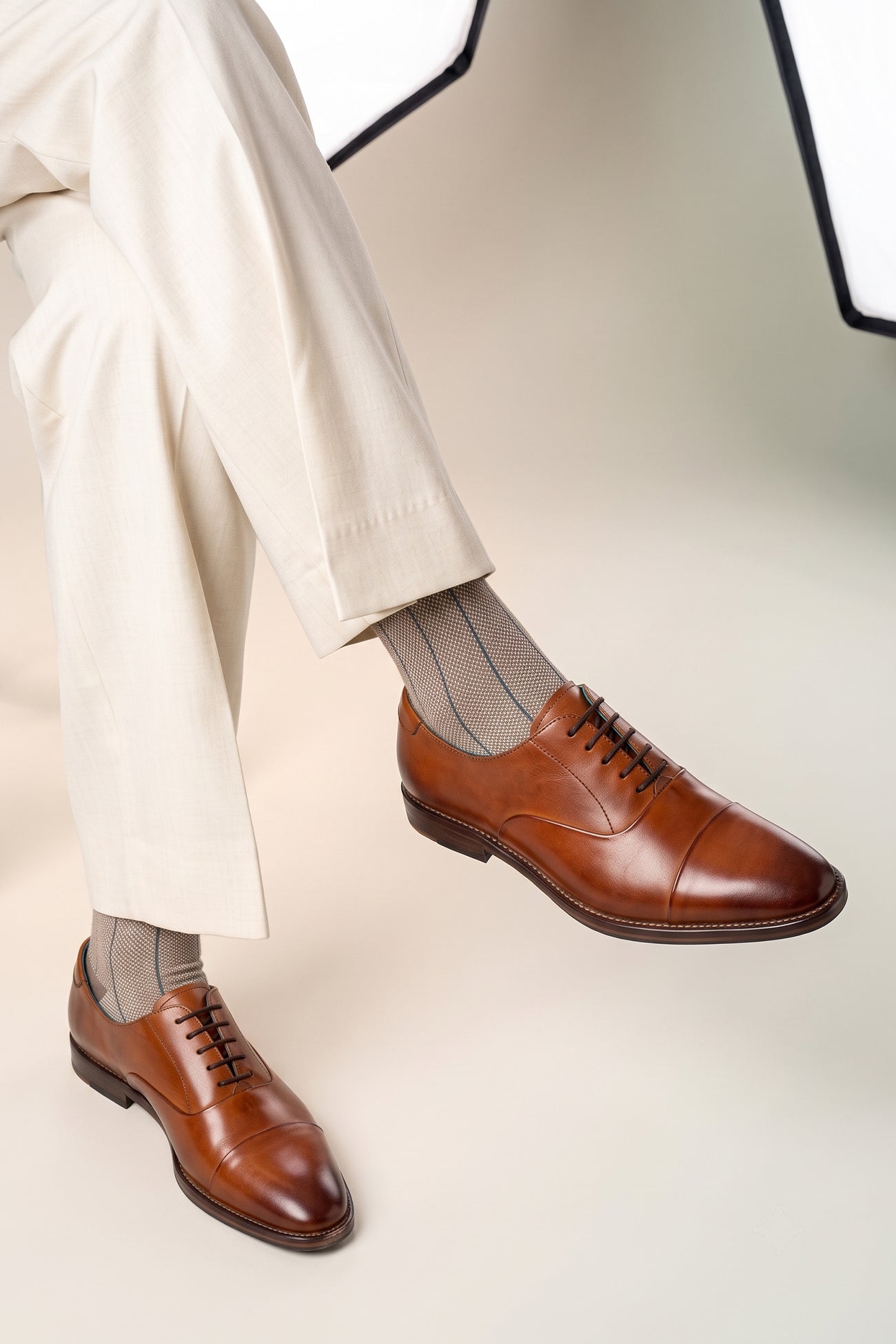
An Oxford features a Closed Lacing System. Look at the flaps of leather where the shoelace eyelets are punched (these are called the quarters). On an Oxford, the bottom of these flaps is sewn flat underneath the front part of the shoe (the vamp). When the shoe is laced up, it creates a sleek, tight, unbroken "V" shape. There are no loose flaps. The silhouette is incredibly streamlined, hugging the contour of the foot like a second skin.
The History
The Oxford traces its roots back to Oxford University in the 1800s. Students rebelled against the high, restrictive knee-boots that were fashionable at the time, cutting them down to the ankle and creating a sleek, flat shoe with side slits (the "Oxonian"). Over time, the slits were moved to the front and replaced with laces, creating the modern Oxford. It was a shoe of academia and the elite.
How to Wear It
Because of its sleek profile, the Oxford must be worn with sharp tailoring.
-
The Ultimate Standard: A Oswin Hyde Classic Black Leather Oxford is the gold standard for a charcoal or navy business suit.
-
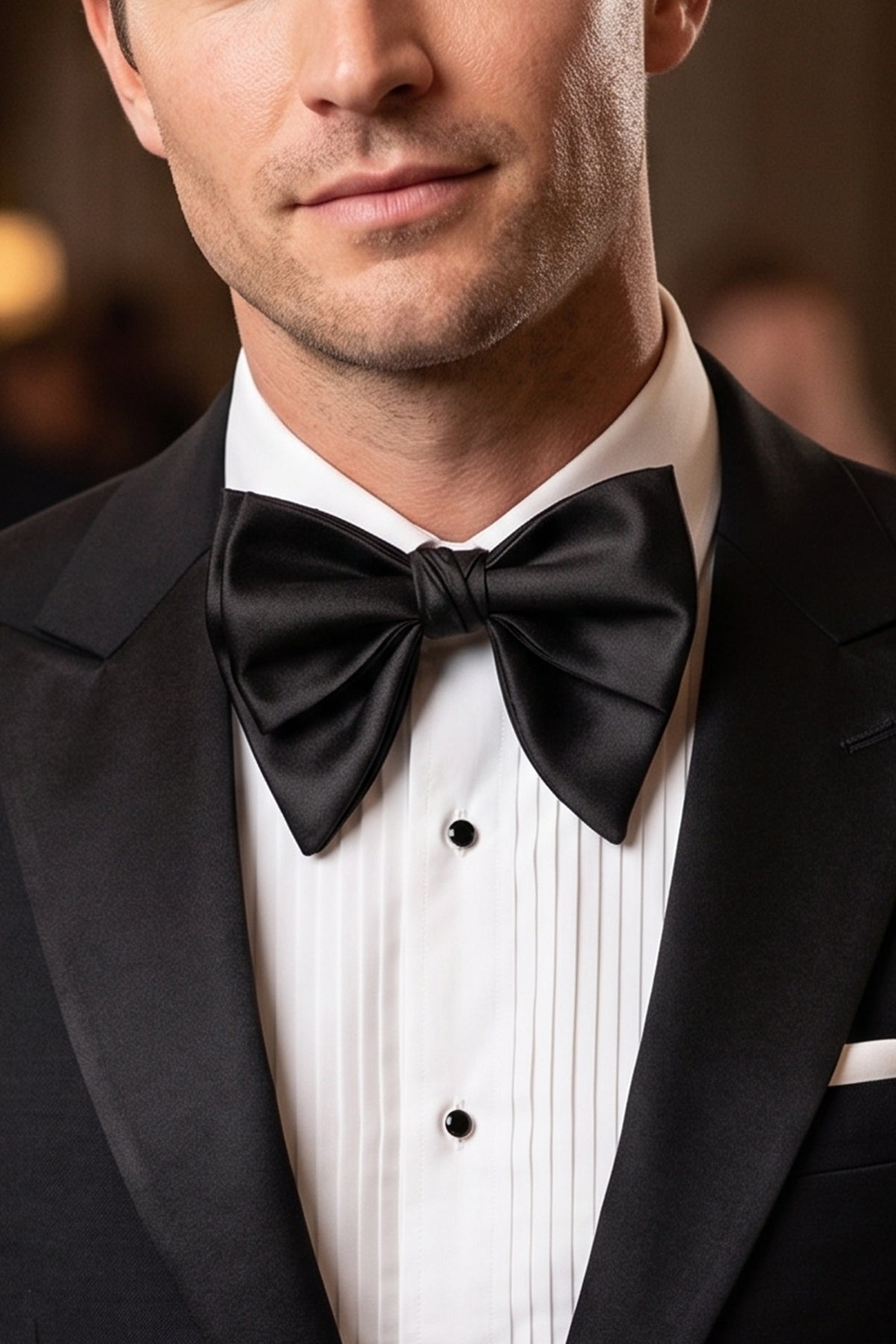
The Wholecut: The most formal version of the Oxford is the "Wholecut." This is an Oxford crafted from one single, flawless piece of leather with zero seams. It is the pinnacle of elegance and pairs brilliantly with tuxedos or bespoke wedding suits.
-
What to Avoid: Never wear an Oxford with casual chinos, denim, or shorts. The contrast between the formal, rigid shoe and the casual trouser makes it look like you are wearing mismatched clothing.
Level 2: The Derby (The Versatile Workhorse)
If the Oxford is the boardroom executive, the Derby is the rugged, versatile weekend warrior who cleans up well on a Friday. It is a step down in formality, but a massive step up in versatility and comfort.
The Defining Characteristic: Open Lacing
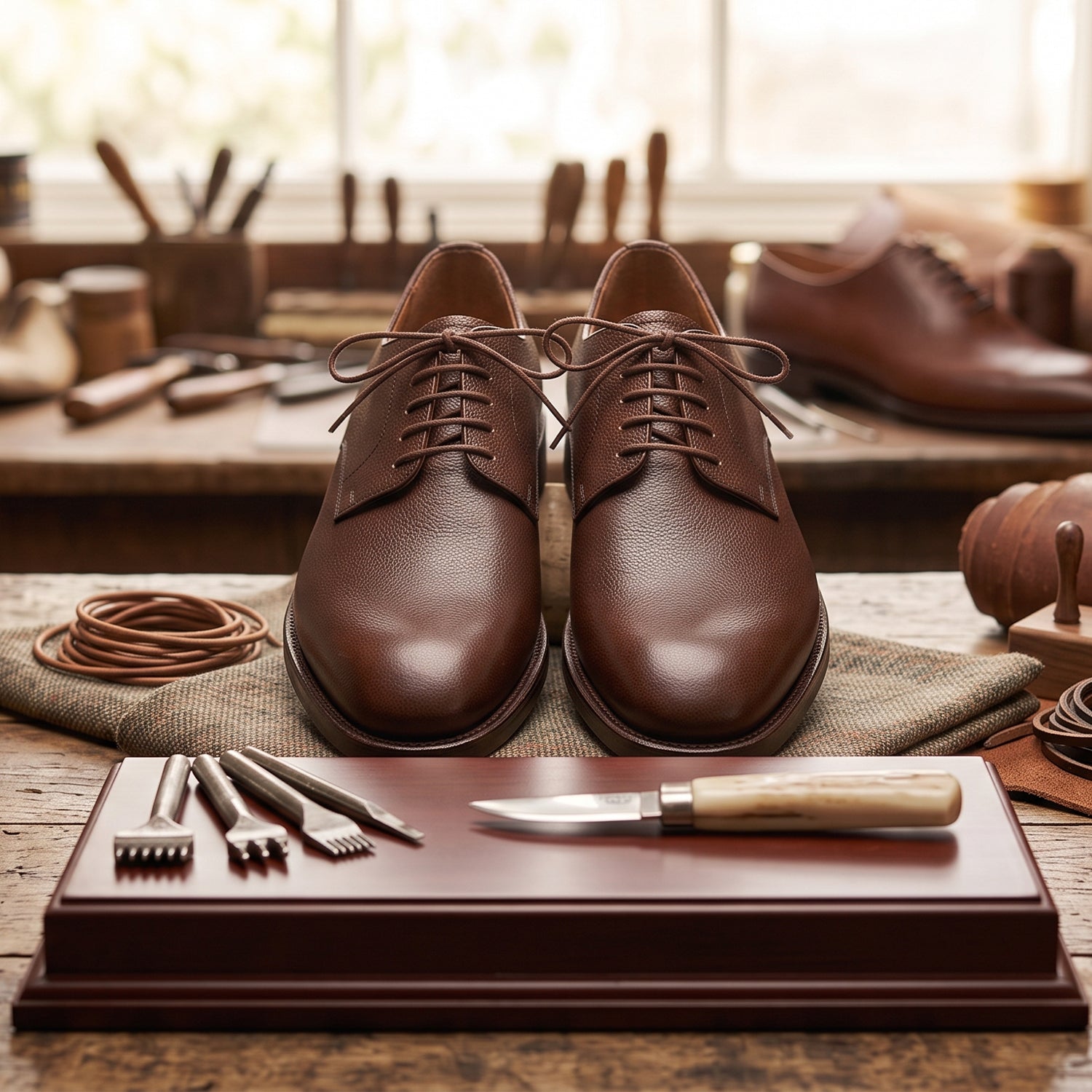
The Derby is defined by its Open Lacing System. The flaps of leather containing the eyelets are sewn on top of the front of the shoe. Because the flaps are not sewn down at the bottom, they can open much wider. This makes the Derby incredibly easy to put on and significantly more accommodating for men with wide feet or a high instep. It creates a chunkier, more robust profile than the delicate Oxford.
The History
In the 1850s, the Earl of Derby—a man with notoriously large feet who struggled to squeeze into tight Oxfords—commissioned his shoemaker to create a more forgiving, open-laced boot. It became immensely popular as a sporting and hunting shoe for gentlemen stalking through the British countryside.
How to Wear It
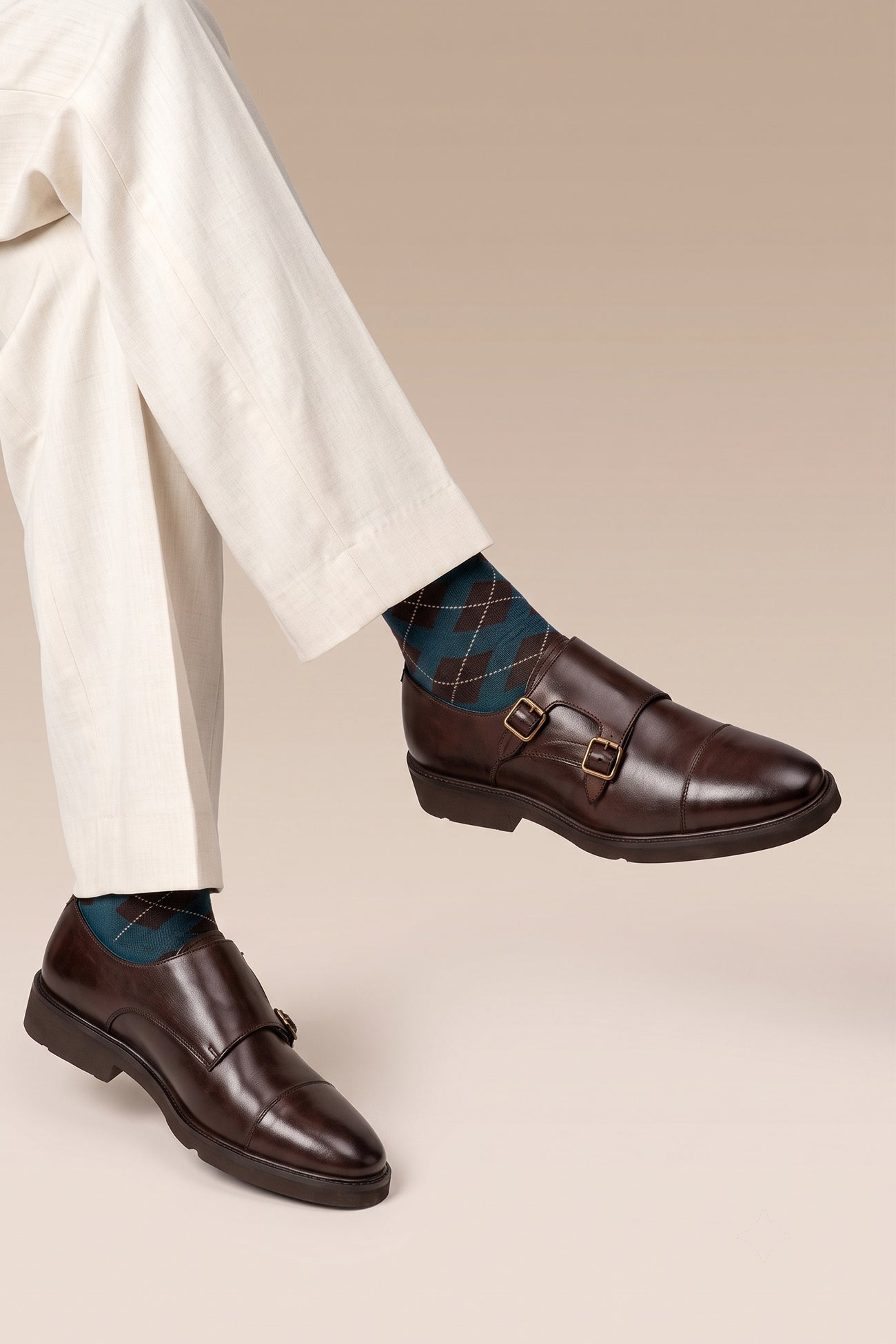
The Derby is the bridge between tailoring and casual wear.
-
The Smart-Casual King: A pair of dark brown Oswin Hyde Leather Derbies is the most versatile shoe a man can own. You can wear them with a navy suit to a less formal office environment, and then wear those exact same shoes with dark denim and a sweater on the weekend.
-
The Texture Play: Derbies look fantastic in suede or textured leathers, pairing perfectly with heavier fabrics like tweed, flannel, and corduroy.
Level 3: The Brogue (The Maverick)
Here is where the massive confusion happens. Brogue is not a shoe silhouette. Brogue is a decoration.
Let me repeat that: Brogueing is simply the act of punching decorative holes into the leather. You can have an Oxford Brogue. You can have a Derby Brogue. You can have a Monk Strap Brogue. Brogueing is a verb, not a noun.
The History of the Holes
The word "brogue" comes from the Gaelic word bróg (bog). Centuries ago, Scottish and Irish farmers working in the wet, muddy bogs needed a shoe that wouldn't fill up with water and rot their feet. They physically punched holes through the leather of their shoes to allow the bog water to drain out.
By the 1920s, the Duke of Windsor (a massive fashion influencer of his time) began wearing these perforated country shoes on the golf course and to high-society weekend retreats. The holes stopped going all the way through the leather and became a purely decorative detail.
The Hierarchy of Brogueing
The more holes a shoe has, the less formal it is. The rugged, outdoor history of the brogue means it carries an inherent casualness.
-
The Quarter Brogue: The most formal. It only has punching along the edge of the toe cap. An Oswin Hyde Quarter Brogue Oxford is perfectly acceptable for the office.
-
The Half Brogue: Punching along the toe cap edge, plus a decorative medallion punched into the center of the toe.
-
The Full Brogue (Wingtip): The most casual. The toe cap extends back along the sides of the shoe in a "W" or wing shape, heavily perforated everywhere. A heavy Oswin Hyde Tan Full Brogue is a spectacular shoe, but it belongs in the countryside or the pub, not the boardroom.
How to Wear It
Brogues demand texture. A tan or chestnut Brogue is the ultimate companion to a heavy tweed suit, a Barbour jacket, or raw selvedge denim. Because the shoe is visually "busy" with all those perforations, keep your trousers relatively simple.
The Golden Rule of the Hierarchy
When deciding what to wear, ask yourself two questions:
-
How sharp is the suit? If the suit is razor-sharp, lightweight wool meant for high-society, wear an Oxford. If the suit is heavy, textured, or you are wearing separates (blazer and chinos), wear a Derby or a Loafer.
-
Where are you going? The city demands smooth leather and minimal details (Oxfords/Derbies). The countryside and the weekend welcome heavy details, perforations, and chunkier silhouettes (Brogues/Boots).
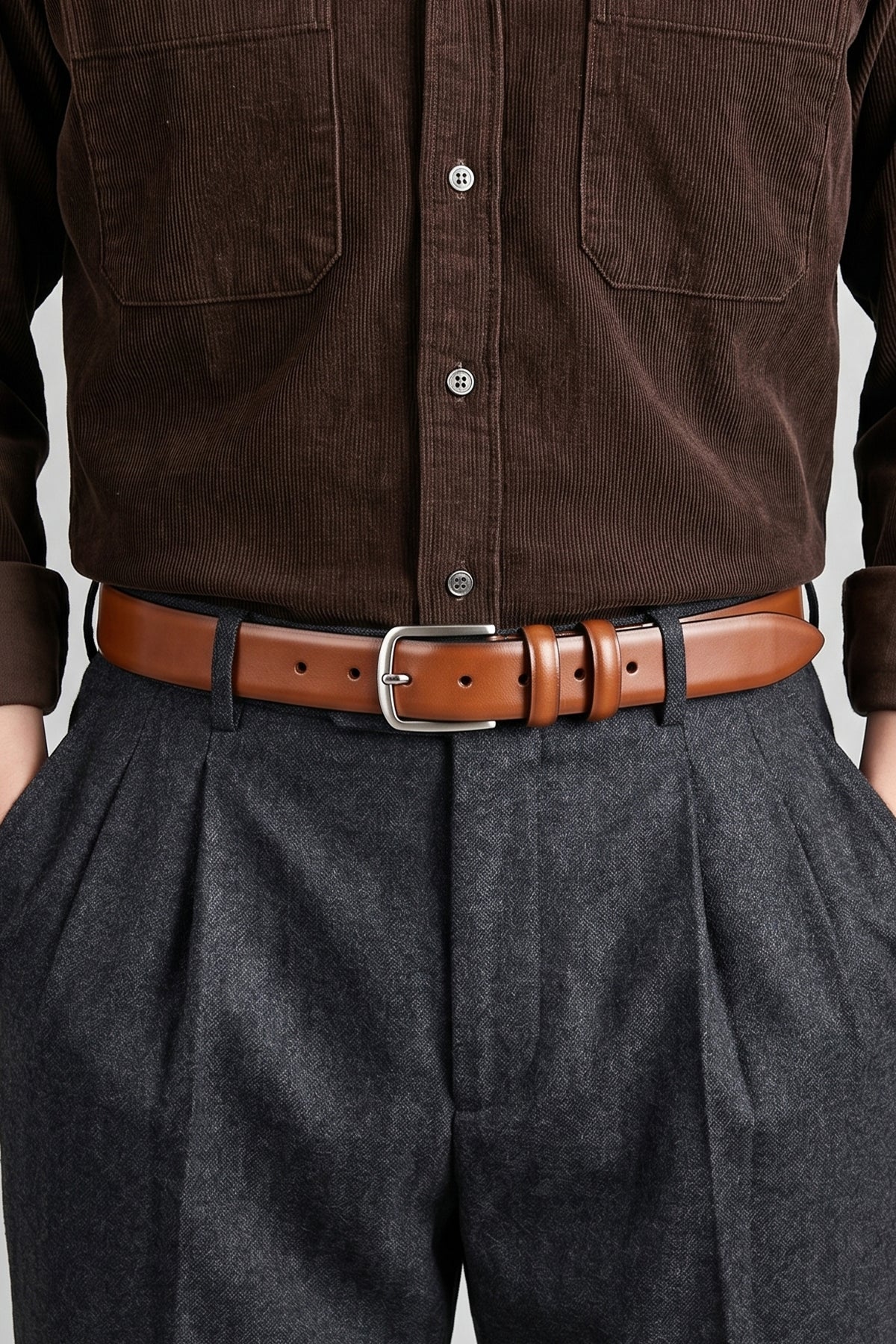
Do not forget to match your leathers. Whether you choose an Oxford, Derby, or Brogue, the entire look collapses if your belt doesn't match. Ensure you pair your choice with a corresponding Oswin Hyde Premium Leather Belt to lock the outfit together.
Master this hierarchy, and you will never stand in front of your wardrobe feeling confused again.
Leave a comment
All comments are moderated before being published.
This site is protected by hCaptcha and the hCaptcha Privacy Policy and Terms of Service apply.