


Decoding Black Tie: The Ultimate Guide to Tuxedo Footwear (Velvet, Patent, or Polish?)
Let us have a frank conversation about the phrase “Black Tie.” When that thick, embossed invitation lands on your doormat dictating a Black Tie dress code, it usually triggers one of two reactions in a man.
The first is absolute panic. The sudden realization that you haven't worn a tuxedo since a university ball a decade ago, and your current formal wardrobe consists entirely of a slightly tired navy lounge suit. The second reaction is a thrill of excitement—the James Bond fantasy, the chance to finally dress to the absolute pinnacle of masculine elegance.
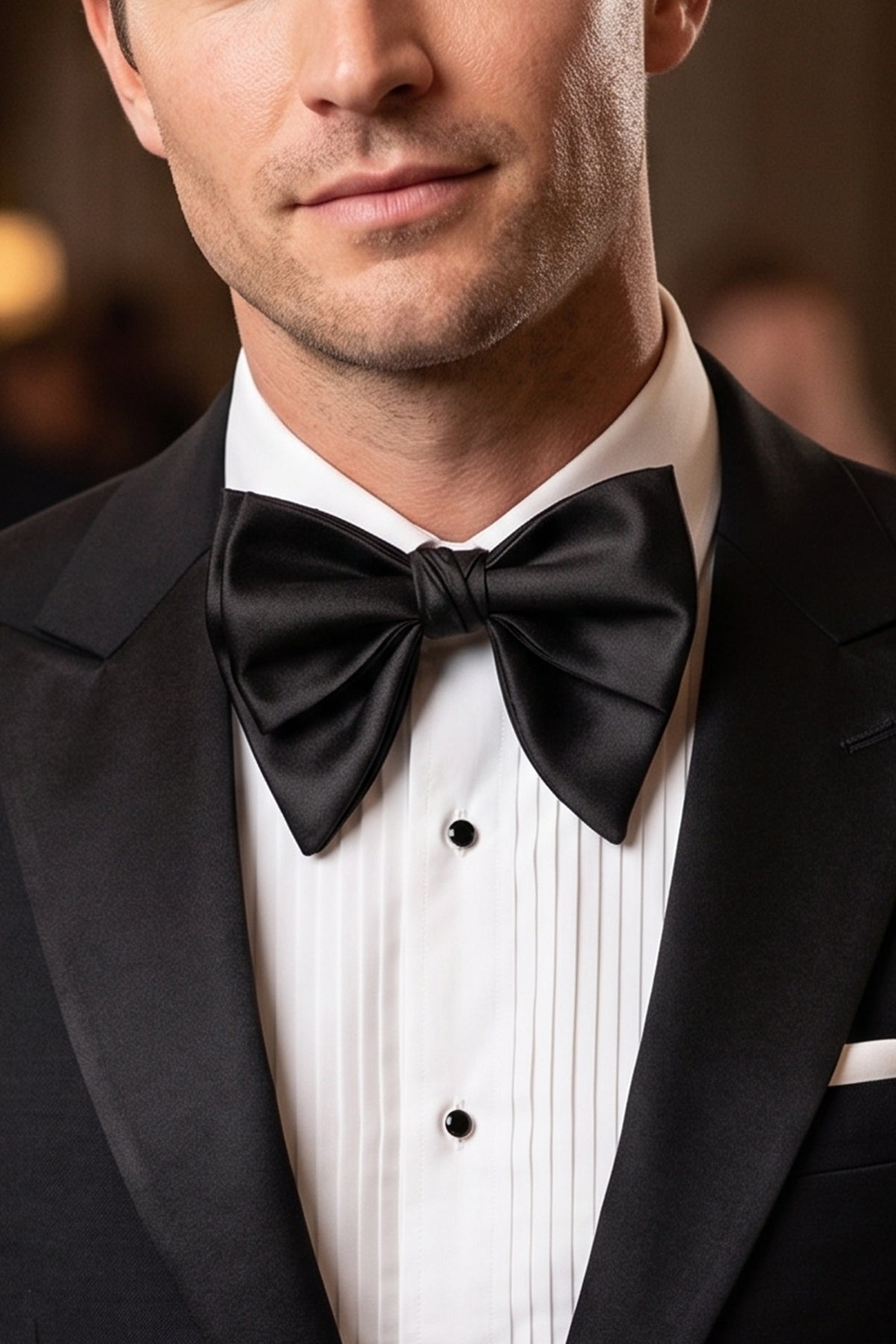
But whether you are terrified or thrilled, the tuxedo itself is only half the battle. You can rent a decent dinner jacket (though you shouldn't), and you can buy a fantastic bow tie. But if you get the footwear wrong, the entire illusion shatters instantly. Black Tie is the most rigid, unforgiving dress code in modern menswear. There is virtually no room for “creative expression” below the ankle. If you wear standard brown office shoes with a tuxedo, you don’t look quirky; you look like you got dressed in the dark.
At Oswin Hyde, we believe that navigating Black Tie footwear comes down to three distinct paths. Here is your definitive masterclass on the Velvet Slipper, the Patent Oxford, and the High-Shine Calfskin.
The Traditionalist’s Choice: The Patent Leather Oxford
If you want to play strictly by the rules, patent leather is your undisputed champion.
The History of the Shine
To understand why we wear shiny shoes with tuxedos, you have to look back to the Victorian era. Evening events involved dancing, and dancing involved highly polished wooden floors. Gentlemen realized that standard shoe polish would inevitably rub off onto the hems of their female partners’ expensive silk dresses.
The solution was patent leather. Originally, this involved coating the leather with layers of linseed oil varnish, creating a high-gloss, waterproof finish that wouldn't transfer polish onto a lady’s ballgown. Today, modern patent leather is usually achieved using a synthetic coating, but the aesthetic rule remains the same: evening wear demands a mirror shine.
The Style Rules
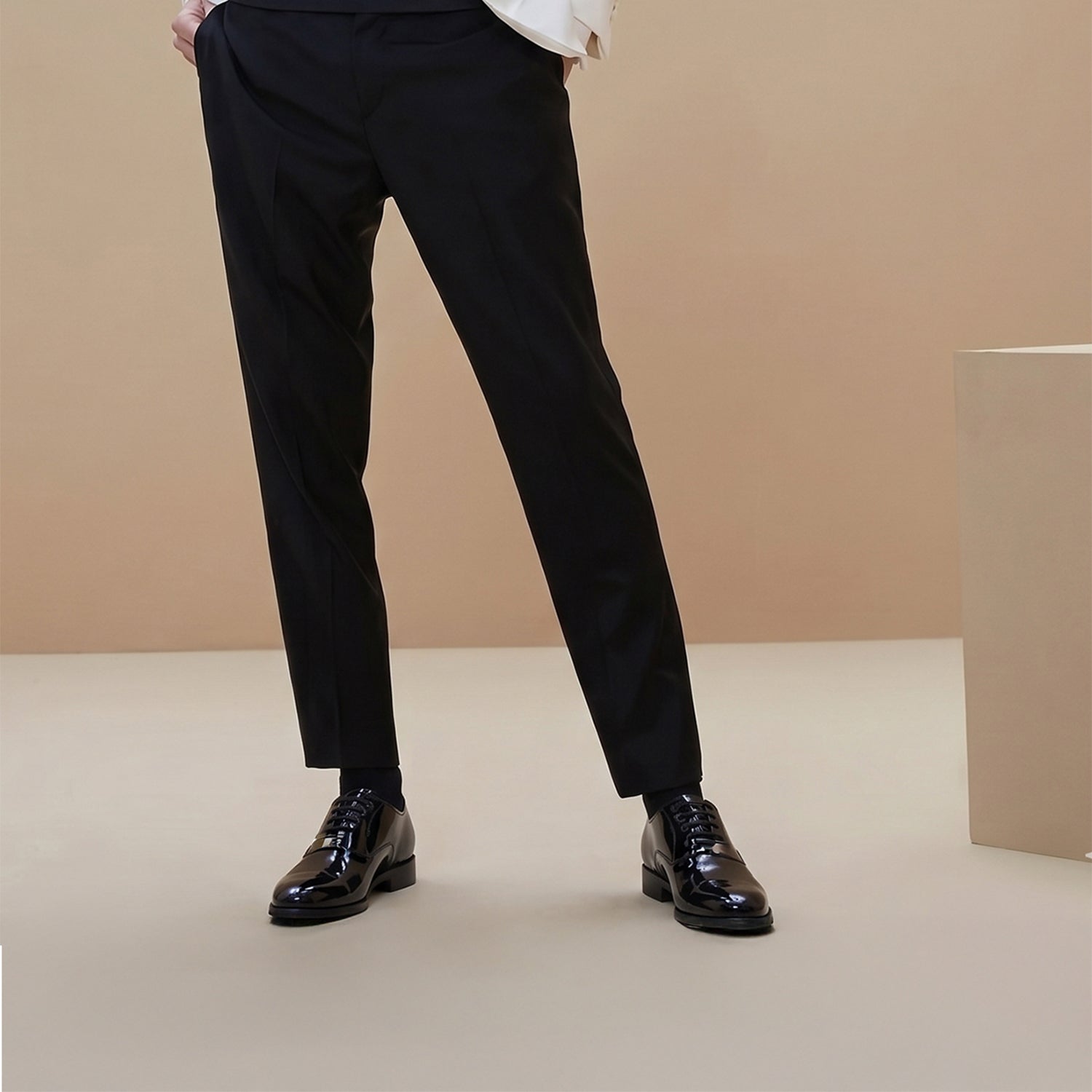
If you are buying patent shoes for a Black Tie wedding, it must be an Oxford silhouette. The closed lacing system is the most formal construction available. You want a plain toe—no brogueing, no stitching, no toe caps. Just a sleek, unbroken surface of black glass.
The Drawback (and How to Manage It)
Patent leather looks phenomenal, but it has two distinct drawbacks. First, because of the coating, it does not breathe well. You are essentially wrapping your feet in a very elegant layer of non-porous material. If the wedding is in the height of summer, your feet will get hot. Second, patent leather creases. Where the shoe bends across your toes, the coating will eventually crack if not cared for. The Fix: You must insert cedar shoe trees the very second you take them off. You also cannot use standard shoe polish on patent leather—it will dull the shine. You must use a dedicated patent leather cleaner or a damp cloth to wipe them down.
The Aristocrat’s Choice: The Velvet Smoking Slipper
If the patent Oxford is for the traditionalist, the velvet slipper (often called an opera pump or Albert slipper) is for the man with absolute, unshakable confidence.
A Touch of Royal Rebellion
Prince Albert popularized the velvet slipper in the 1840s as an indoor house shoe to protect the carpets of royal estates from the mud of outdoor boots. By the 1920s, Hollywood elites and European aristocrats began wearing them out of the house, pairing them with tuxedos for glamorous evening events.
Today, wearing a velvet slipper to a Black Tie wedding is the ultimate "flex." It says, “I know the rules so well that I know exactly how to bend them.”
How to Pull it Off
You cannot wear a velvet slipper half-heartedly.
-
The Silhouette: The shoe should be a wholecut slipper, preferably in deep black velvet, featuring a quilted silk lining and a hard leather sole.
-
The Details: Some slippers feature embroidered crests or motifs on the toe (like a skull and crossbones or a family crest). Keep it subtle.
-
The Trousers: This is the most crucial part. Your tuxedo trousers must have a sharp taper and zero break. They should finish exactly at the ankle. A velvet slipper is a delicate shoe; if a baggy trouser leg swallows it, you will look like you are wearing your actual bedroom slippers.
The Purist’s Choice: The Spit-Shined Calfskin Oxford
What if you despise the plastic-like feel of patent leather, and you don’t have the flamboyant personality required for a velvet slipper? What if you just want a beautifully made, deeply versatile shoe?
Enter the calfskin Oxford.
Strictly speaking, traditionalists will tell you that standard calfskin is too casual for a tuxedo. They are wrong. A flawlessly crafted, black full-grain leather Oxford is perfectly acceptable for Black Tie, provided you are willing to put in the elbow grease.
The Military Mirror Shine
You cannot pull your black work shoes out of the wardrobe and wear them with a dinner jacket. The leather must be elevated to mimic patent leather. This requires a "spit shine" or a "bulling" technique.
This involves building up microscopically thin layers of hard wax polish on the toe cap and the heel counter of the shoe.
-
Strip the shoe of old polish using a leather cleaner.
-
Apply a base layer of black wax polish.
-
Take a tight cotton chamois cloth, wrap it around your index and middle fingers, and dab it into the wax.
-
Add a single droplet of cold water to the leather.
-
Rub the wax into the leather in rapid, tight circles. The water prevents the wax from sticking to the cloth and forces it into the pores of the leather.
-
Repeat this process 15 to 20 times. Eventually, the texture of the leather disappears, replaced by a deep, glassy, mirror-like finish that rivals patent leather.
The beauty of this choice? When the Black Tie wedding is over, you can strip the heavy wax off, apply a standard cream polish, and wear those exact same shoes to the office on Monday morning. That is the true economics of brilliant footwear.
The Final Unforgivable Sins of Black Tie Footwear
Before we close this masterclass, let us review the absolute red lines. If you are wearing a tuxedo, you must never:
-
Wear Brown: "No brown in town" is an old rule that has relaxed for business wear, but for Black Tie, it remains absolute law. Black only.
-
Wear Open Lacing: No Derby shoes. No chunky soles. No brogue punching.
-
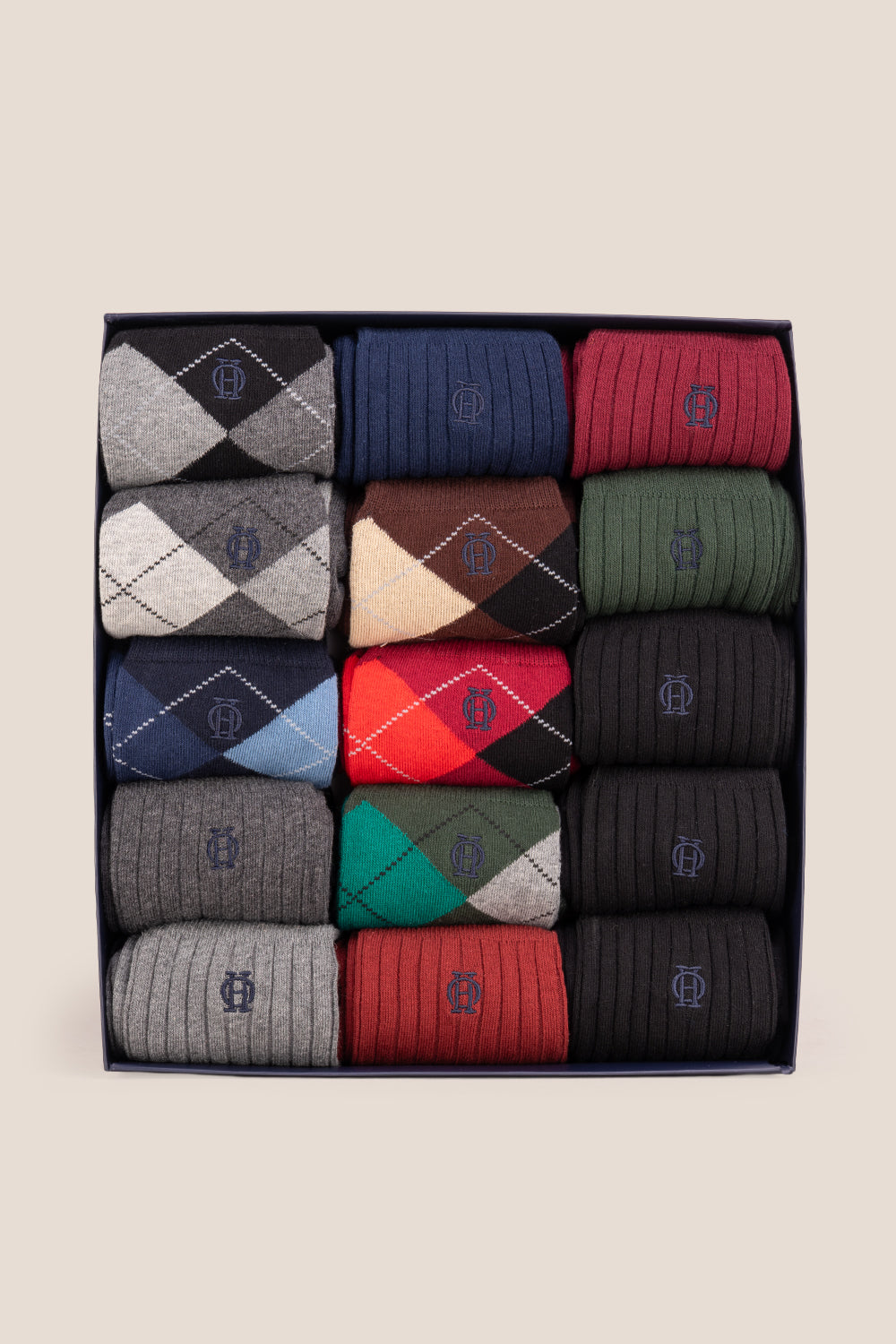
Flash Your Calves: When you sit down in a tuxedo, your trousers will ride up. If you are wearing standard ankle socks, you will expose your hairy, pale shins to the rest of the wedding guests. It ruins the elegance of the outfit. You must wear "over-the-calf" evening socks, ideally in silk or very fine mercerized cotton.
Nail the footwear, tie your own bow tie, and confidently order a martini at the reception. You’ve earned it.
Read more
There is a tragic phenomenon in men’s fashion. A man will spend £150 on a beautiful pair of handcrafted leather wedding shoes, wear them for 12 hours on a Saturday, and then place them back in thei...
If you are the groom, you already have a monumental amount on your plate. You are negotiating catering budgets, dealing with seating plan politics, and trying to figure out if your uncle can be tru...
Leave a comment
All comments are moderated before being published.
This site is protected by hCaptcha and the hCaptcha Privacy Policy and Terms of Service apply.