



The Anatomy of Suede: Why You’re Wearing It Wrong and How to Protect It
There is a pervasive, stubborn myth in British menswear. It is a myth passed down from fathers to sons, whispered in pub corners, and believed by millions. The myth is this: Suede is incredibly fragile, it will be instantly destroyed by a single drop of rain, and it should only be worn indoors on sunny days.
This is absolute nonsense.
The fear of suede has robbed generations of men of the most beautifully textured, comfortable, and versatile material in shoemaking. At Oswin Hyde, we view suede not as a delicate luxury, but as a robust, essential component of a modern gentleman's wardrobe.
If you understand what suede actually is, how it is crafted, and—most importantly—how to weaponize modern shoe care against the elements, suede becomes virtually indestructible. Here is your ultimate, 2500-word deep dive into the anatomy of suede, why you are probably wearing it wrong, and how to master it.
What Actually IS Suede? The Biology of the Hide
To understand why suede behaves the way it does, you have to understand its biology.
Standard full-grain leather (the shiny leather used for Oxfords) uses the outermost layer of the animal's hide. This outer layer is dense, tightly packed with fibers, and naturally smooth, which is why it reflects light and takes a hard wax polish so well.
Suede, however, is created from the corium—the underside of the hide (the flesh side). To make suede, the leather is split, and the underside is aggressively sanded and buffed. This sanding process tears the tightly packed fibers apart, creating millions of tiny, incredibly soft hairs. This furry surface is called the "nap."
Why the Nap Matters: The nap is the defining characteristic of suede. Because it consists of millions of microscopic hairs standing on end, it does not reflect light; it absorbs it. This gives suede its signature matte, rich, and deeply saturated colour. A navy blue shiny leather shoe looks garish and cheap. A navy blue suede shoe looks like pure luxury because the nap drinks in the dye, creating a depth of colour that smooth calfskin simply cannot replicate.
The Myth of Water Damage
Let’s address the rain issue. Why do people think water destroys suede?
When untreated suede gets wet, water penetrates the nap. When the water evaporates, it can cause those tiny fibers to become stiff and clump together, flattening the nap. If the water was dirty (like a puddle in London), it leaves a ring of sediment behind.
But here is the truth: Water itself does not ruin the leather structurally. If you drop a suede shoe in a bucket of clean water, let it dry naturally with a shoe tree inside it, and brush it vigorously, it will be absolutely fine.
However, we do not want to go through that recovery process every time it drizzles. The solution is modern nanotechnology.
The Suede Armor Protocol: How to Make It Bulletproof
If you buy a pair of Oswin Hyde Suede Chelsea Boots and walk straight out into a British winter without treating them, you are asking for trouble. You must create an invisible shield.
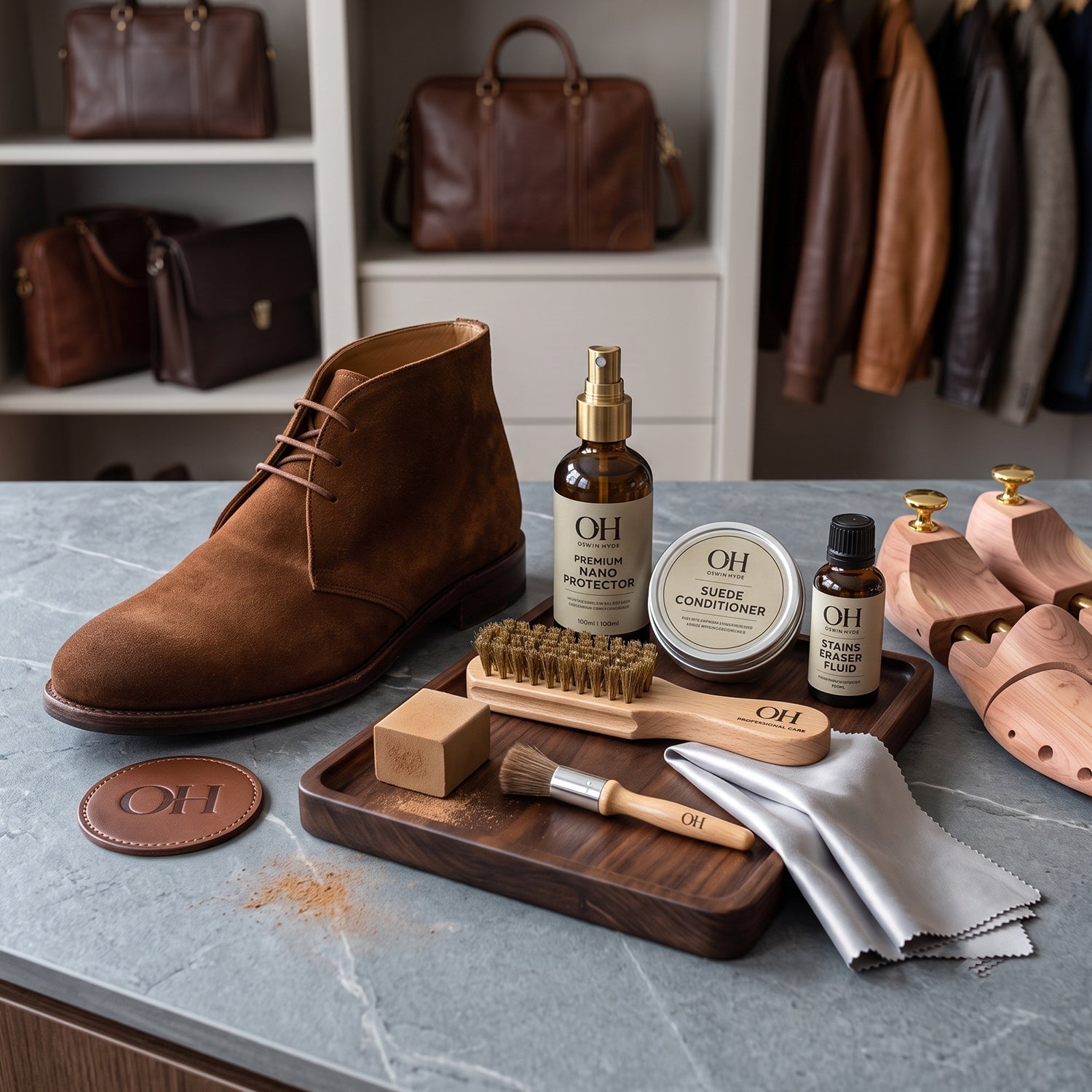
Step 1: The Nano-Protector Spray Before the shoes ever touch the pavement, you need a premium waterproofing spray (like the ones included in our Premium Suede Care Kit. These sprays use nanotechnology to coat every individual microscopic hair of the nap in a hydrophobic resin.
-
The Application: Go outside or to a well-ventilated area. Hold the spray about 20cm away from the shoe and mist it evenly until the suede looks slightly damp. Do not soak it. Let it dry for 60 minutes. Apply a second coat. Let it dry overnight.
-
The Result: The next day, pour a glass of water over the shoe. You will literally watch the water bead up into perfect spheres and roll right off the shoe, completely unable to penetrate the fibers. You have just made your suede shoes waterproof. You should reapply this spray every two months.
Step 2: The Brass Wire Brush The greatest enemy of suede is not rain; it is dust. As you walk, dust settles into the nap. Over time, the friction of your trousers rubbing against the dusty suede acts like sandpaper, flattening the nap completely. The shoe loses its furry texture and becomes "bald" and shiny.
-
The Fix: You must own a suede brush featuring brass bristles surrounded by stiff nylon. After every 3 or 4 wears, give the shoes a brisk, firm brushing in one direction. This physically lifts the hairs back up and flicks the dust out of the hide.
Step 3: The Suede Eraser Do not ever use standard shoe polish, creams, or waxes on suede. You will glue the nap down and ruin the shoe instantly. If you get a tough scuff mark on the toe (like from kicking a desk leg), use a suede eraser. It looks and acts exactly like a pencil rubber. Rub it vigorously over the dry stain. The friction crumbles the eraser, which physically binds to the dirt and lifts it out of the hide. Brush away the crumbs, and the stain is gone.
Styling Suede: Texture over Formality
Now that you know how to protect it, how do you wear it? Suede is a cheat code for adding visual interest to an outfit.
Because of its matte texture, suede is inherently less formal than polished leather. You should not wear a suede shoe with a tuxedo, and you generally shouldn't wear it with a severe, highly structured worsted wool business suit.
Suede thrives on texture matching.
-
Summer Suede: In the warmer months, suede looks phenomenal next to lightweight, textured fabrics like linen, seersucker, and cotton. A pair of snuff-brown Oswin Hyde Suede Tassel Loafers worn with a beige linen suit or tailored shorts is the absolute pinnacle of Riviera style. The softness of the suede matches the breeziness of the linen.
-
Winter Suede: In the cold months, suede is your best friend against heavy fabrics. Flannel, tweed, corduroy, and heavy denim are all deeply textured materials. If you pair them with a highly polished, shiny black shoe, the contrast is jarring. But pair a heavy tweed jacket with a Suede Chukka Boot, and the matte texture of the suede perfectly complements the rough, warm texture of the wool.
The Ultimate Suede Investment: The Loafer
If you are going to buy one pair of suede shoes to start your collection, it must be the loafer.
The loafer is already a relaxed silhouette because it lacks laces. When you render it in suede, it becomes the most comfortable, versatile shoe you own. Suede stretches and conforms to the shape of your foot significantly faster than stiff calfskin leather. An unlined suede loafer requires virtually zero break-in time.
If you are attending a smart-casual wedding, a Friday in the office, or a Sunday lunch at a nice restaurant, a navy or dark brown suede loafer solves the dress code instantly. Pair it with a Oswin Hyde Suede Belt to perfectly match the textures across your outfit.
Stop fearing the rain. Stop believing the pub myths. Buy the protector spray, invest in the texture, and unlock the most stylish tier of men's footwear.
Leave a comment
All comments are moderated before being published.
This site is protected by hCaptcha and the hCaptcha Privacy Policy and Terms of Service apply.