



The Art of the Patina: Why Your Old Leather Shoes Look Better Than Your New Ones
We live in a culture obsessed with the "box fresh" aesthetic. When we buy a new car, a new phone, or a new pair of trainers, we are terrified of the first scratch. We want things to remain in a state of suspended animation, perfectly flawless forever.
When it comes to high-quality leather footwear, this mindset is not only impossible to maintain; it is entirely counterproductive.
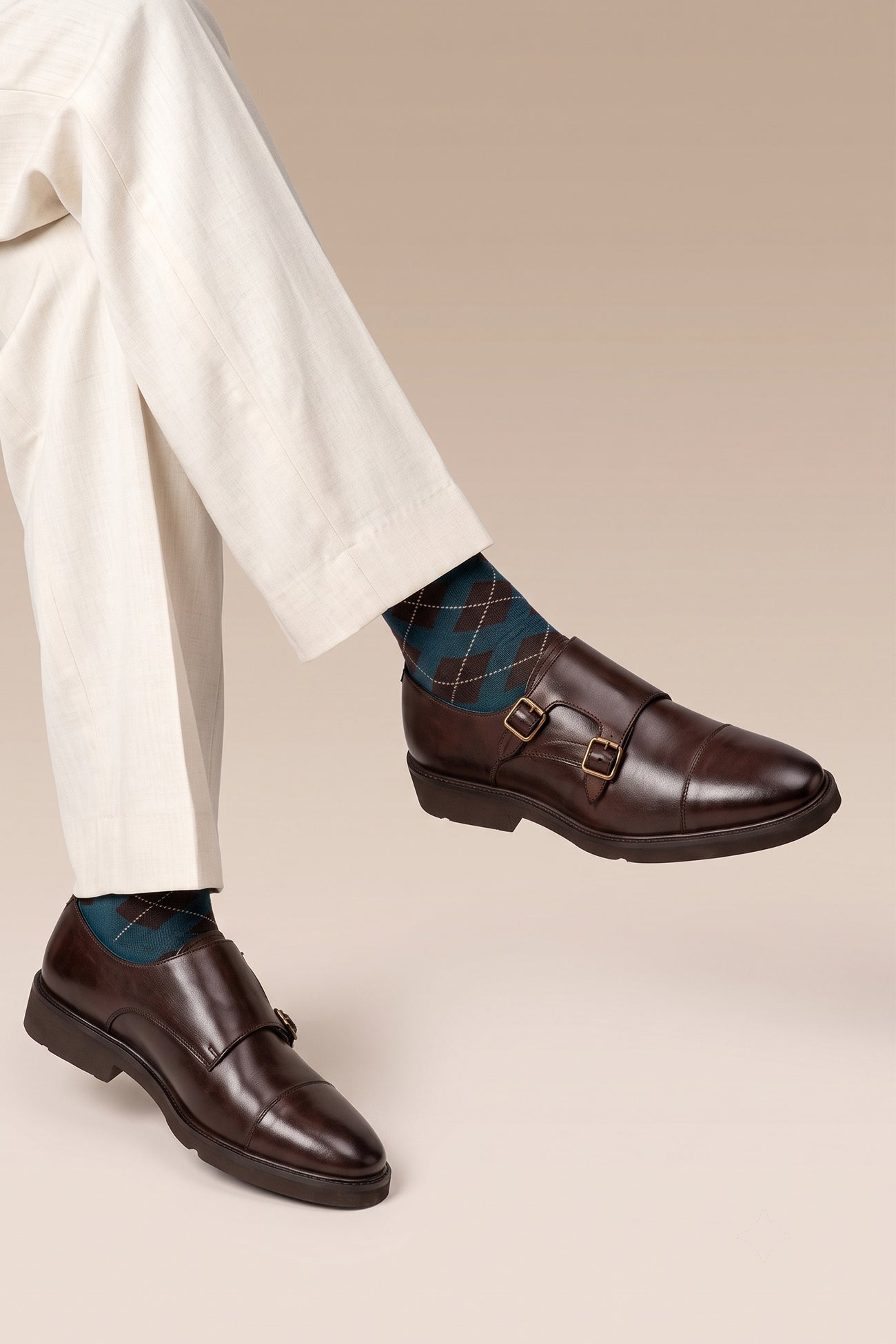
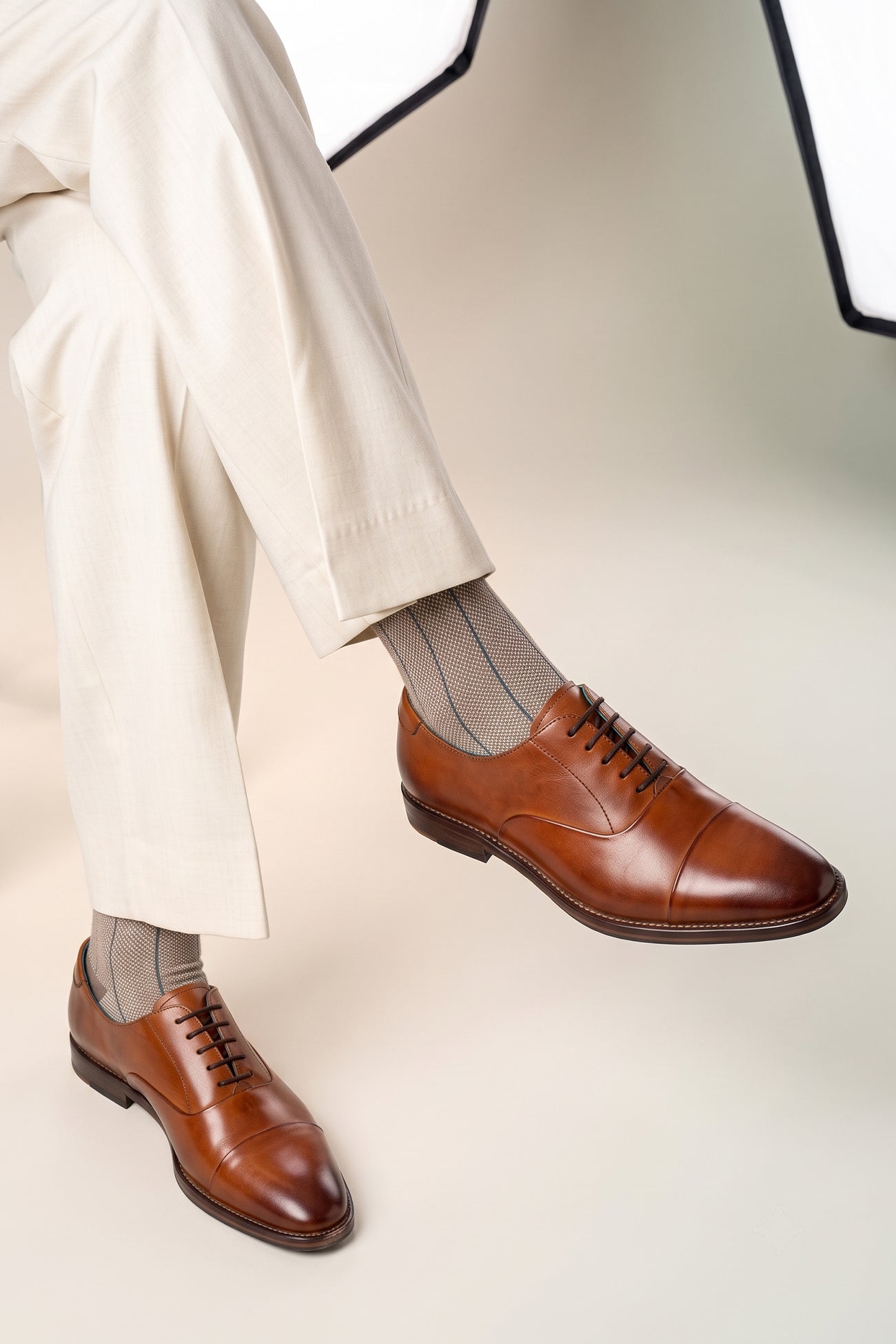
If you buy a pair of cheap, plastic-coated, synthetic shoes, their "box fresh" state is the best they will ever look. The moment you wear them, they begin a rapid, ugly decline. They crack, they peel, and they die. But if you invest in premium, full-grain calfskin leather, the opposite is true. A pair of Oswin Hyde Full-Grain Leather Oxfords straight out of the box is essentially a blank canvas. It is only through years of wear, polishing, scuffing, and care that the shoe truly comes alive.
This beautiful, complex aging process is called "Patina." It is the holy grail of shoemaking, and it is the reason why a well-cared-for pair of ten-year-old leather shoes will always look infinitely more expensive and sophisticated than a brand-new pair.
Here is your masterclass on the biology of patina, how to survive the "ugly phase" of breaking in your shoes, and how to accelerate the aging process like a master cobbler.
What Exactly is Patina?
Patina is the visual history of your footwear. From a chemical and biological standpoint, it is the result of several factors interacting with the porous surface of the animal hide over time.
-
Oxidation: Just like copper turns green or silver tarnishes, leather reacts to the oxygen in the air. Over time, light-coloured leathers (like tan or chestnut) will naturally darken and deepen in colour simply by existing in the world.
-
UV Exposure: Sunlight acts upon the dyes in the leather. Areas of the shoe exposed to direct sunlight will subtly change tone, creating beautiful highs and lows in the colour profile.
-
Friction and Heat: As you walk, the leather flexes. The areas of high friction (like the toe cap and the heel counter) are constantly rubbing against the inside of your trouser leg, polishing the leather naturally.
-
The Absorption of Oils: Leather is skin. It absorbs the natural oils from your hands when you tie the laces, the waxes from your shoe polishes, and the moisture from the environment.
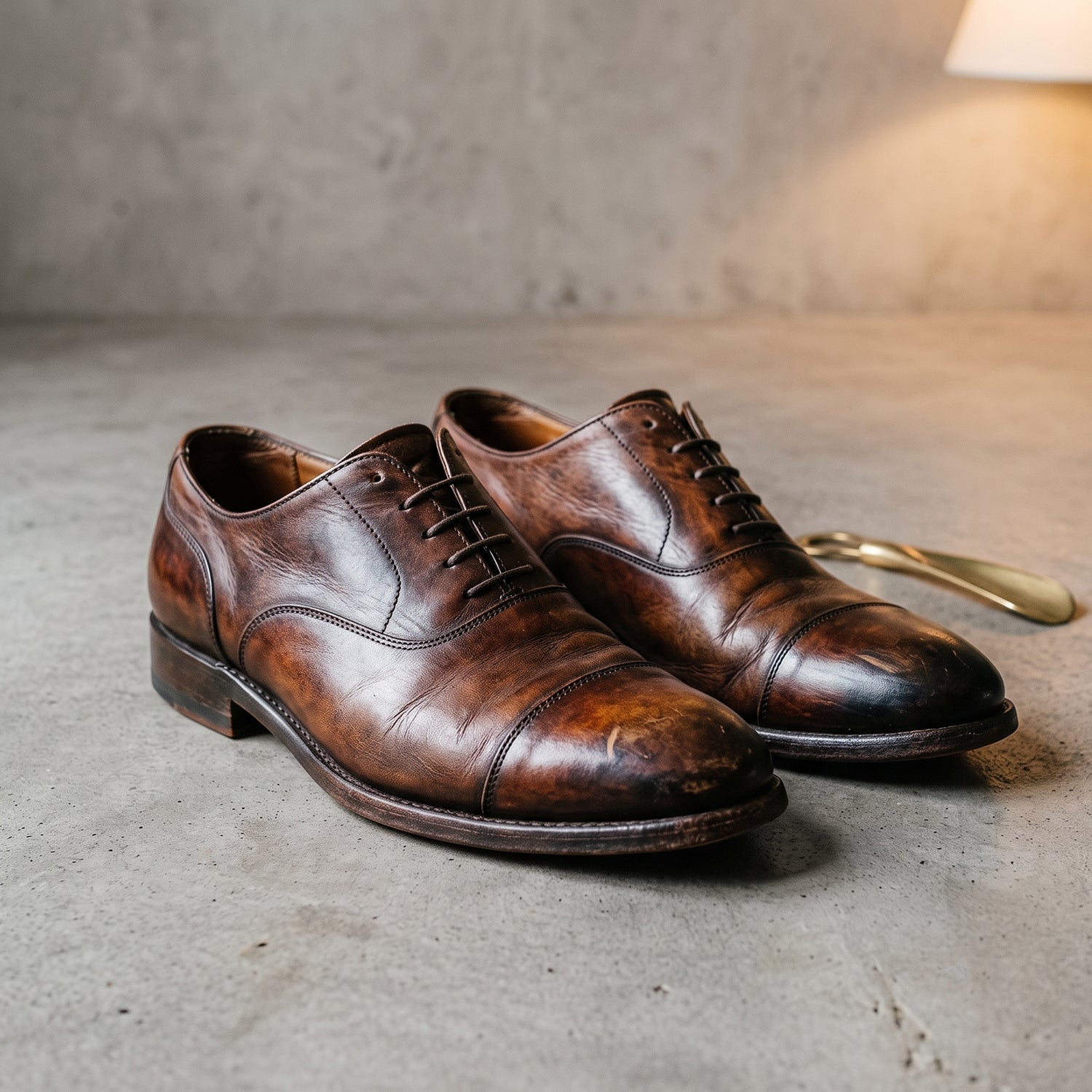
When all these factors combine over years, the flat, uniform colour of a brand-new shoe breaks down into a complex, multi-tonal masterpiece. A flat brown shoe becomes a rich tapestry of espresso, mahogany, and amber.
Crust Leather vs. Pre-Dyed Leather
To fully appreciate patina, you need to know how your shoes were coloured in the first place.
Most standard shoes use "pre-dyed" leather. The hide is dyed in massive vats at the tannery before it is ever cut into the shape of a shoe. This creates a very uniform, solid colour that is highly resistant to fading. It is reliable, but it takes a very long time to develop a unique patina.
At the higher echelons of shoemaking, artisans use "Crust Leather." Crust leather is tanned but left completely uncoloured (it looks like a pale, ghostly beige). The shoemaker crafts the shoe, and then a patina artist hand-paints the dyes onto the finished shoe using sponges, brushes, and rags.
Because crust leather is hand-painted, the dye is absorbed unevenly. The artist will intentionally make the toe cap and heel darker (a process called burnishing) and leave the vamp lighter. If you buy a hand-patinaed shoe like the Oswin Hyde Hand-Finished Brogue, the patina process has already been jumpstarted for you by an artisan.
Surviving the "Ugly Phase"
This is where most men panic. You wear your new shoes for a week, and suddenly you notice deep creases forming across the top of the foot (the vamp). You notice a scuff on the toe. You think, "I've ruined them."
You haven't. You have just entered the Ugly Phase.
Think of breaking in leather shoes like breaking in a pair of raw selvedge denim jeans. At first, the creases look stark and aggressive. But as you continue to wear the shoe, those initial sharp creases soften into rolling folds that map perfectly to the exact articulation of your foot.
The scuffs on the toe are not damage; they are the foundation of your future patina. When you polish over a scuff with a pigmented cream, the scratched leather absorbs the pigment differently than the smooth leather around it, creating a micro-variation in colour. Over years, hundreds of these tiny, polished-over scuffs create depth.
How to manage the creases: You cannot stop leather from creasing—if it didn't crease, you couldn't walk. But you can stop it from cracking. The moment you take your shoes off, you must insert Cedar Shoe Trees. The cedar wood absorbs the sweat that makes leather brittle, and the spring mechanism pushes the leather back into shape, ensuring those creases remain elegant rolling folds rather than sharp, damaging cracks.
How to Accelerate and Control Your Patina
You do not have to wait a decade to get a beautiful patina. You can control the aging process through your shoe care routine.
1. The "Burnished" Toe Effect If you want to give a pair of medium-brown shoes an aggressive, antique look, you can artificially burnish the toe cap. Take a dark brown or black wax polish (significantly darker than the shoe itself). Apply a very light layer only to the hard toe cap and the hard heel counter. Buff it out. The dark wax will settle into the pores, creating a beautiful, shadowed gradient that mimics years of aging.
2. The Power of Cream Polish To build a rich patina, you need to feed the leather. Every few weeks, apply a high-quality, pigmented shoe cream (we recommend picking up the Premium Shoe Care Kit. Unlike hard wax, which just sits on top of the leather to provide shine, cream polish penetrates deep into the hide, moisturizing it and depositing rich pigments that build up over time.
3. Never Use "Instant Shine" Sponges Those cheap, silicone-soaked sponges you buy at the supermarket are the death of patina. They coat your shoe in a layer of synthetic oil that suffocates the leather, prevents it from breathing, and stops it from aging naturally. Throw them in the bin.
The Economics of Aging
Buying a high-quality leather shoe is a long-term economic strategy. A £40 pair of glued plastic shoes will look their absolute worst on the day you throw them in the bin.
A £150 pair of Goodyear-welted or Blake-stitched Oswin Hyde shoes will look their absolute best on the day you take them to a cobbler to be resoled for the third time. You are not buying a shoe; you are buying a canvas that you will paint with your own footsteps over the next decade. Embrace the scuffs, cherish the creases, and enjoy the art of the patina.
Leave a comment
All comments are moderated before being published.
This site is protected by hCaptcha and the hCaptcha Privacy Policy and Terms of Service apply.