



Men's Chelsea Boots Guide: How to Wear Them, Suede vs Leather and What to Buy
By Oswin Hyde · Last updated 28 September 2026
The short answer: Chelsea boots are ankle-high, laceless boots with elastic side panels. Sleek black or dark brown leather Chelsea boots on a slim sole can be worn with a suit and in most business-casual offices. Suede and chunky soles are more casual. Choose leather for the office and wet weather, and suede for weekends and a softer look.
What makes a Chelsea boot
A Chelsea boot has three features: an ankle-high shaft, elastic side panels (gussets) instead of laces, and usually a pull tab at the heel. The style dates back to the Victorian era, when elastic-sided boots were first made for riding and walking. It became a fashion icon in 1960s London, when the King's Road set in Chelsea gave it its name.
Are Chelsea boots formal?
They sit between formal and casual, which is why they are so useful. How formal a Chelsea boot looks depends on four things:
| Feature | Smarter | More casual |
| Material | Smooth leather | Suede |
| Colour | Black, dark brown | Tan, sand, rust, green |
| Toe | Slim, almond | Round |
| Sole | Slim, low-profile | Chunky, lug or crepe |
A slim black Chelsea like the Jack Black or the all-black Dennis Full Black is smart enough for a suit. The brogue-detailed Harry Black works for weddings and the office. A sand suede Darwin is a weekend boot.
How to wear Chelsea boots with a suit
- Choose sleek leather. Black or dark brown, slim sole, almond toe.
- Get the trouser length right. Slim or tapered trousers with little or no break should sit just over the top of the boot, so the elastic is hidden when you stand.
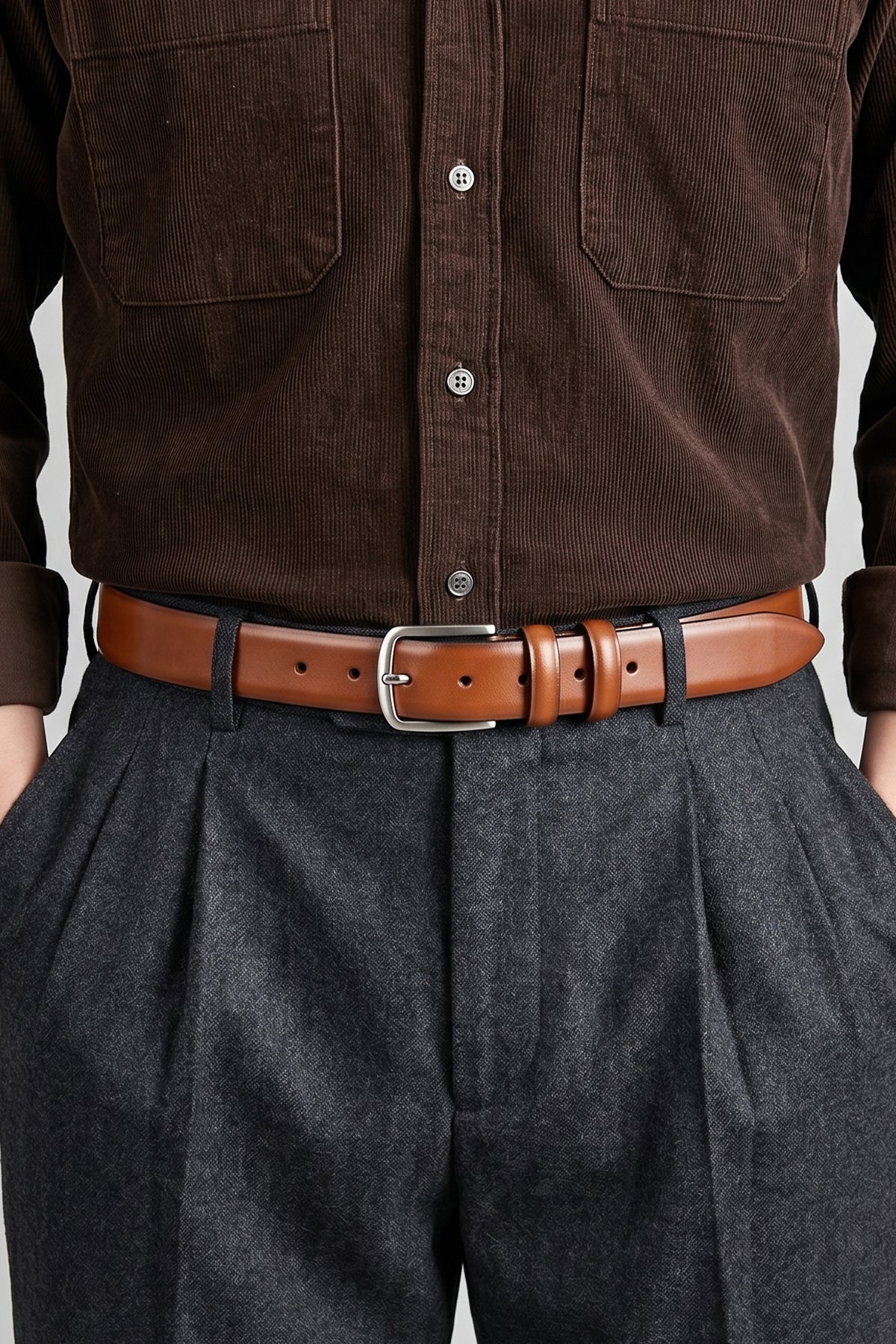
- Match the belt. Keep your belt in the same colour family as your boots. See how to match your belt and shoes.
- Pick the right suit. Chelsea boots suit navy, charcoal and grey suits in worsted wool or flannel. For black tie, wear Oxfords or patent shoes instead.
Leather vs suede Chelsea boots
| Leather | Suede | |
| Look | Sharp, smart | Soft, relaxed, textured |
| Best for | Office, suits, evenings | Weekends, smart-casual, dry days |
| Weather | Handles rain once protected | Needs a protector spray; avoid heavy rain |
| Care | Cream, polish, buff | Brush, eraser, protector |
| Try | Darwin Black, Michael Brown | Darwin Brown Suede, Vinnie Rust |
If you only own one pair, choose dark brown leather: it works with suits, chinos and jeans. For a second pair, add suede. For care, read our guide to cleaning leather and suede Chelsea boots.
What to wear with Chelsea boots
| Outfit | What works |
| Suit | Black or dark brown leather, slim sole, trousers with no break |
| Business casual | Brown leather or dark suede with chinos, a knit and a blazer |
| Jeans | Any colour; slim or straight dark denim, hem just touching the boot |
| Chinos | Tan or brown leather, or suede in sand or tobacco |
| Winter | Leather with a protector spray, flannel trousers, overcoat |
For office outfits, read our guide to Chelsea boots for business casual. Choosing between a sleek and a chunky sole? See chunky vs classic Chelsea boots.
Chelsea boots vs chukka boots vs brogue boots
A chukka is an ankle boot with two or three eyelets for laces, more casual than a sleek Chelsea; try the Jefferson Brown. A brogue boot adds decorative perforations: the lace-up Gregory Brown has a wingtip, while the Grant Brown combines brogueing with a Chelsea build. The classic Chelsea is the most versatile of the three.
How to choose a good pair of Chelsea boots
- Leather: full-grain leather ages well and can be polished. Every Oswin Hyde boot uses 100% full-grain crust leather from LWG Silver-rated tanneries, with no plastic coating or printed grain.
- Lining: a leather lining breathes and moulds to your foot. Ours are lined in genuine lambskin or sheepskin with padded insoles.
- Fit: the heel should lift slightly at first and settle as the leather softens. The elastic should grip your ankle without pinching. Most Oswin Hyde styles come in UK 7–12 (EU 41–46), with selected styles in UK 13 and 14. See our shoe size guide.
- Sole: a slim sole for suits, a thicker or lightweight city sole for all-day comfort.
Our Chelsea boot range
| Style | Details | Best for |
| Darwin | Classic Chelsea in leather and five suede colours | Everyday, the most versatile |
| Michael | Lightweight city sole | All-day wear, commuting |
| Jack | Sleek pull-on boot | Suits, formal and casual |
| Christopher | Smart everyday leather | Office and weekend |
| Dennis Full Black | All black with black elastic | Suits and evenings |
| Harry | Brogue Chelsea | Weddings, office |
| Grant | Brogue Chelsea with a chunky sole | Smart-casual, jeans |
| Vinnie | Stitched suede upper | Relaxed weekend wear |
Frequently asked questions
Are Chelsea boots formal?
Sleek leather Chelsea boots in black or dark brown with a slim sole are smart enough for a suit and most offices. Suede, light colours and chunky soles are more casual.
Can you wear Chelsea boots with a suit?
Yes, with slim or tapered trousers that just cover the top of the boot. Choose black or dark brown leather and avoid chunky soles.
Are suede or leather Chelsea boots better?
Leather is smarter and handles rain better once protected. Suede looks softer and more relaxed and suits dry, smart-casual days.
What colour Chelsea boots are most versatile?
Dark brown leather: it works with navy, grey and charcoal suits, chinos and jeans.
Should Chelsea boots be tight?
Snug but not painful. The elastic should hold your ankle and the heel should lift only slightly. Leather softens and moulds to your foot with wear.
Can you wear Chelsea boots in winter?
Yes. Choose leather, apply a water and stain protector, and clean off road salt promptly.
Why are they called Chelsea boots?
Elastic-sided boots date from the Victorian era; the name comes from the King's Road in Chelsea, London, where the style became fashionable in the 1960s.
Shop the pieces in this guide: Chelsea boots · all men's boots · suede shoes · leather belts
Read more

What shoes to wear to a wedding: black or brown by suit colour, Oxfords, Derbies, monk straps, loafers and black tie, plus groom, groomsmen and guests.

What Oxford shoes are, the main types, how to spot a quality black Oxford and how to wear Oxfords formally and casually.
Leave a comment
All comments are moderated before being published.
This site is protected by hCaptcha and the hCaptcha Privacy Policy and Terms of Service apply.